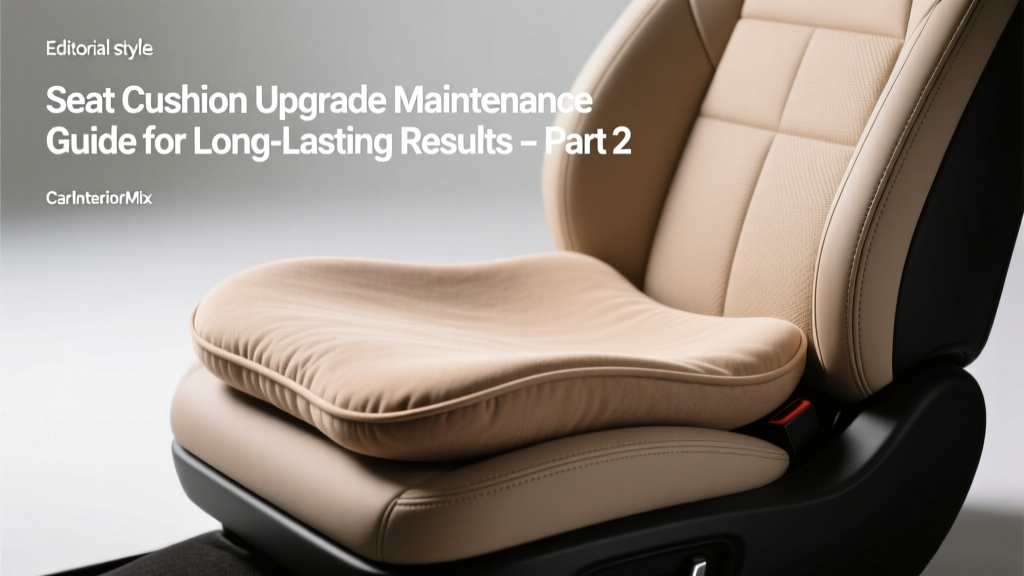
Seat Cushion Upgrade: Maintenance Tips
A seat cushion upgrade can transform how your car feels day to day. Better support, less fatigue on long drives, and a cleaner, more tailored look are all real benefits?until the cushion starts sliding around, trapping heat, flattening out, or wearing unevenly. That?s where maintenance becomes the difference between a ?quick fix? and a long-term comfort upgrade.
Part 1 covered choosing the right cushion and getting it installed properly. This second part is about keeping that upgrade performing like new: cleaning routines that won?t damage foam or gel, how to prevent shifting and premature compression, seasonal adjustments, and small habits that extend the life of your car seat cushion dramatically.
If you?ve invested in a memory foam seat cushion, gel seat pad, lumbar combo, or a full seat cushion system, this guide will help you protect your comfort and your interior?without turning maintenance into a chore.
Know What You?re Maintaining: Cushion Materials and What They Need
Not all seat cushions age the same way. Before you clean or ?fix? anything, identify what you have. Most car seat cushions fall into one of these categories:
Memory Foam (Viscoelastic Foam)
- Strengths: Pressure relief, contouring comfort, good for longer commutes.
- Weak points: Heat retention, slow rebound, can break down if soaked or repeatedly crushed at the same point.
- Maintenance focus: Keep it dry, clean the cover properly, rotate for even wear.
High-Density Polyurethane Foam
- Strengths: Firmer support, better structure over time, often used in ergonomic wedges.
- Weak points: Can feel stiff if not paired with a soft cover; edges can crumble if low-quality.
- Maintenance focus: Prevent abrasion and edge wear; keep away from harsh chemicals.
Gel-Infused Cushions or Gel Pads
- Strengths: Cooling feel, good pressure distribution, great for hot climates.
- Weak points: Gel can harden in cold temperatures; some grids can tear if bent sharply.
- Maintenance focus: Avoid extreme temperature swings; clean with gentle soap; store flat when possible.
Air-Cell or Inflatable Support Cushions
- Strengths: Adjustable firmness, lightweight, reduces pressure points.
- Weak points: Can leak or puncture; valves can clog with dust.
- Maintenance focus: Inspect seams/valve, keep away from sharp objects, don?t overinflate.
The Weekly and Monthly Maintenance Routine (Simple, Repeatable)
You don?t need a ?detailer-level? routine. The goal is to prevent sweat, dust, skin oils, and friction from shortening the cushion?s life.
Weekly: 5-Minute Refresh
- Remove loose debris: Lift the cushion and shake it outside the car if possible.
- Vacuum the cushion cover: Use a soft brush attachment to avoid snagging knit fabric or mesh.
- Wipe contact points: If the cover is non-absorbent (PU leather, vinyl), use a lightly damp microfiber with mild soap.
- Check for shifting: Realign the cushion so it sits centered on the seat base and doesn?t block seat belt buckles.
Monthly: Deeper Cleaning + Inspection
- Remove the cover (if removable): Follow the tag instructions. Most are hand-wash or gentle cycle cold.
- Spot-clean foam/gel carefully: Never soak foam. Use a damp cloth and a tiny amount of mild detergent. Blot?don?t scrub aggressively.
- Dry completely: Air dry in shade with good airflow. Avoid direct sun for long periods (UV can weaken fabrics and heat can distort gel).
- Inspect wear zones: Look at the front edge (where thighs slide), side bolsters, and the underside anti-slip material.
- Check attachment points: Straps, clips, and buckles should be snug but not cutting into upholstery.
Step-by-Step: Fixing a Cushion That Slides or Tilts
A sliding seat cushion isn?t just annoying?it can change your driving posture and make support inconsistent. Here?s a reliable approach that works for most cars and cushion styles.
Step 1: Clean Both Surfaces (Yes, Both)
Most slipping comes from invisible dust and fabric lint acting like ball bearings.
- Vacuum the vehicle seat bottom thoroughly.
- Wipe the seat surface with an interior-safe cleaner suitable for your upholstery type (cloth vs leather).
- Wipe the cushion?s underside anti-slip layer with a slightly damp microfiber and let it dry.
Step 2: Reposition for Proper Support Geometry
- Center the cushion so your hips sit evenly, not perched on one edge.
- For wedge cushions, the thicker side typically goes toward the rear unless the manufacturer specifies otherwise.
- Make sure the cushion doesn?t interfere with seat controls, airbag seams, or seat belt latch access.
Step 3: Add a Non-Slip Layer (When Needed)
If the built-in grip isn?t enough, a thin non-slip mat can help without adding bulk.
- Best option: Rubberized non-slip shelf liner (trim to fit).
- Alternative: Automotive-grade anti-slip pad designed for seat cushions.
- Avoid: Sticky adhesives that can stain leather or leave residue on fabric seats.
Step 4: Secure Straps the Right Way
- Route straps so they don?t pinch wiring under powered seats.
- Keep tension snug but not aggressive?over-tightening can distort foam and create pressure ridges.
- Re-check strap tension after 2?3 drives; foam compresses slightly and straps can loosen.
Protecting Your Cushion From Heat, Sweat, and UV
Temperature and moisture are the main reasons seat cushion upgrades stop feeling ?new.? Real-world example: a memory foam seat cushion left in a sun-baked car regularly can feel softer at first, then lose resilience faster due to repeated heat cycling.
Hot Weather Tips (Summer and Warm Climates)
- Ventilate: Crack windows slightly when parked safely, or use a windshield sunshade to reduce cabin heat.
- Choose breathable covers: Mesh or 3D spacer fabric covers reduce sweat buildup and odor.
- Deodorize lightly: Sprinkle baking soda on removable covers (not foam), let sit 15 minutes, then vacuum.
- Don?t leave gel cushions folded: Heat plus bending can weaken gel grids over time.
Cold Weather Tips (Winter)
- Let gel warm up: Gel pads can feel firm when cold. Give them a few minutes to acclimate before judging comfort.
- Avoid forced heat directly on foam: Don?t place cushions directly against strong heaters or use harsh heat sources to ?speed dry.?
- Watch for condensation: Wet jackets and snowmelt can dampen covers. Remove and air out when you get home.
Cleaning Methods That Won?t Ruin Foam or Covers
Many seat cushion complaints start with a well-meaning cleaning that goes too far?oversaturating foam, using strong degreasers, or machine drying on high heat.
Best Cleaning Products for Most Cushions
- Mild detergent (fragrance-free if possible): Great for removable covers.
- Interior-safe upholstery cleaner: For non-removable fabric surfaces.
- 70/30 water + white vinegar (light mist): Helpful for odor on covers; test first on an unseen area.
- Microfiber towels + soft brush: For gentle agitation without pilling fabric.
What to Avoid
- Bleach and strong alkaline cleaners: Break down fabrics and can discolor covers.
- Solvents (acetone, harsh degreasers): Can melt synthetic materials and damage anti-slip backing.
- High-heat machine drying: Shrinks covers and warps foam.
- Soaking foam: Foam holds water and can develop odor or mildew internally.
When to Rotate, Flip, or Replace: Managing Compression Over Time
Even the best car seat cushion will compress over time?especially if you drive daily. The trick is to make that compression even and slow.
Rotation Schedule (Easy Rule)
- Every 4?6 weeks: Rotate 180 degrees if the cushion shape allows.
- If it?s contoured: You may not be able to rotate; instead, slightly adjust its position forward/back by 0.5?1 inch to change pressure points.
- If you share the car: Recheck alignment weekly. Different driver heights change how the cushion loads.
Signs Your Cushion Needs Attention (or Replacement)
- It no longer rebounds and stays ?dished? after you stand up.
- You feel the vehicle seat underneath more than you used to.
- The front edge collapses, causing thigh pressure or numbness.
- Cover seams are splitting or the zipper is failing repeatedly.
- Persistent odor remains after proper cleaning and full drying.
Product Recommendations and Smart Comparisons
Rather than chasing ?the best? cushion, match products to your driving pattern and maintenance style. Here are maintenance-friendly options and what they?re good at.
Best for Easy Maintenance: Cushions With Removable, Washable Covers
- Look for: Zippered cover, breathable mesh, durable stitching, and a grippy underside.
- Why it lasts: You can clean sweat and oils regularly without touching the foam core.
Best for Hot Climates: Gel Grid + Breathable Cover
- Look for: Gel grid that stays flat, reinforced edges, and a cover that doesn?t trap heat.
- Maintenance note: Clean gel with mild soap and water; avoid folding and avoid sharp bending.
Best for Long Highway Commutes: Memory Foam With Firm Base Layer
- Look for: Dual-layer construction (firm support + comfort top), anti-slip bottom, and straps.
- Maintenance note: Rotate when possible and keep the foam dry; sweat management is key.
Helpful Add-Ons
- Non-slip liner: Prevents shifting without adhesives.
- Seat protector (thin): Useful for leather seats to prevent abrasion, but choose a non-bulky option to avoid changing driving position.
- Fabric refresher (interior-safe): For odor control between washes.
Common Mistakes to Avoid (That Shorten Cushion Life Fast)
- Over-tightening straps: Can deform foam and create uneven pressure points.
- Blocking seat airbag seams: Some seats have side airbags; bulky cushions or covers can interfere. Always keep airbag paths clear.
- Using oily dressings on cushion covers: Shiny ?protectants? can make surfaces slippery and attract dirt, leading to faster wear.
- Ignoring moisture: Leaving damp covers on foam encourages odor and breakdown.
- Machine drying on high heat: Warps materials and shrinks covers.
- Assuming one position fits forever: Small posture changes over time mean you should reassess fit and alignment periodically.
Real-World Maintenance Examples
Example 1: Daily Rideshare Driver
- Problem: Cushion shifts and gets odor quickly due to frequent entry/exit.
- Fix: Add a trimmed non-slip liner, vacuum weekly, wash cover every 2?3 weeks, and keep a spare cover if available.
- Result: Less sliding, fewer pressure points, and a fresher interior for passengers.
Example 2: Weekend Sports Car Enthusiast
- Problem: Bolstered seats plus a thick cushion creates awkward seating height and wear on side edges.
- Fix: Switch to a thinner, contoured cushion with reinforced side seams and use a seat protector to reduce abrasion.
- Result: Better driving posture, cleaner look, slower edge wear.
FAQ: Seat Cushion Upgrade Maintenance
How often should I wash a seat cushion cover?
For most drivers, every 4?6 weeks works well. If you sweat heavily, commute daily, or drive for work, every 2?3 weeks keeps odor and oils from building up.
Can I use a steam cleaner on my cushion?
Use steam cautiously and mainly on the cover, not the foam core. Too much moisture can get trapped inside foam and lead to odor. If you steam the cover, allow extra drying time with good airflow.
Why does my memory foam cushion feel flatter after a few months?
Compression sets in where your weight is concentrated, especially if you always sit in the same spot and the cushion gets heat-cycled in a parked car. Rotate when possible, adjust position slightly, and keep it clean and dry to slow breakdown.
Is it safe to use a seat cushion with heated seats?
Usually yes, but choose a cushion with breathable materials and avoid very thick insulation layers that trap heat. If the cushion manufacturer warns against heated seats, follow that guidance. Start with low heat and monitor comfort.
How do I stop a cushion from leaving marks on leather seats?
Keep both surfaces clean, avoid sticky pads, and use a thin, colorfast seat protector or non-slip liner designed for interiors. Also, remove the cushion occasionally to let the leather ?breathe? and prevent pressure marks from staying in one place.
Wrap-Up: Your Next Steps for Long-Lasting Comfort
If you want your seat cushion upgrade to stay supportive and look good, keep it simple: vacuum weekly, deep clean monthly, manage heat and moisture, and correct sliding before it becomes a daily annoyance. A few small habits?like letting the cover fully dry, rotating when possible, and using a non-slip liner?can add months (sometimes years) to a cushion?s usable life.
- Set a monthly reminder to remove and inspect the cushion
- Wash or refresh the cover before odors become stubborn
- Recheck alignment and strap tension after long trips
- Adjust seasonally for heat, cold, and moisture
For more seat comfort upgrades, interior care tips, and practical car cabin guides, explore the latest articles on carinteriormix.com.